Speaking is nothing trivial – communication is a basic need
Interview with Dr. Tabea Thies about her research on speech motor biomarkers in Parkinson’s disease. Dr. Tabea Thies is a phonetician and postdoctoral researcher at the Department of Neurology at Cologne University Hospital. She was awarded the Parkinson Foundation’s Innovation Prize in the clinical research category for her project “Speech motor biomarkers in Parkinson’s disease”.
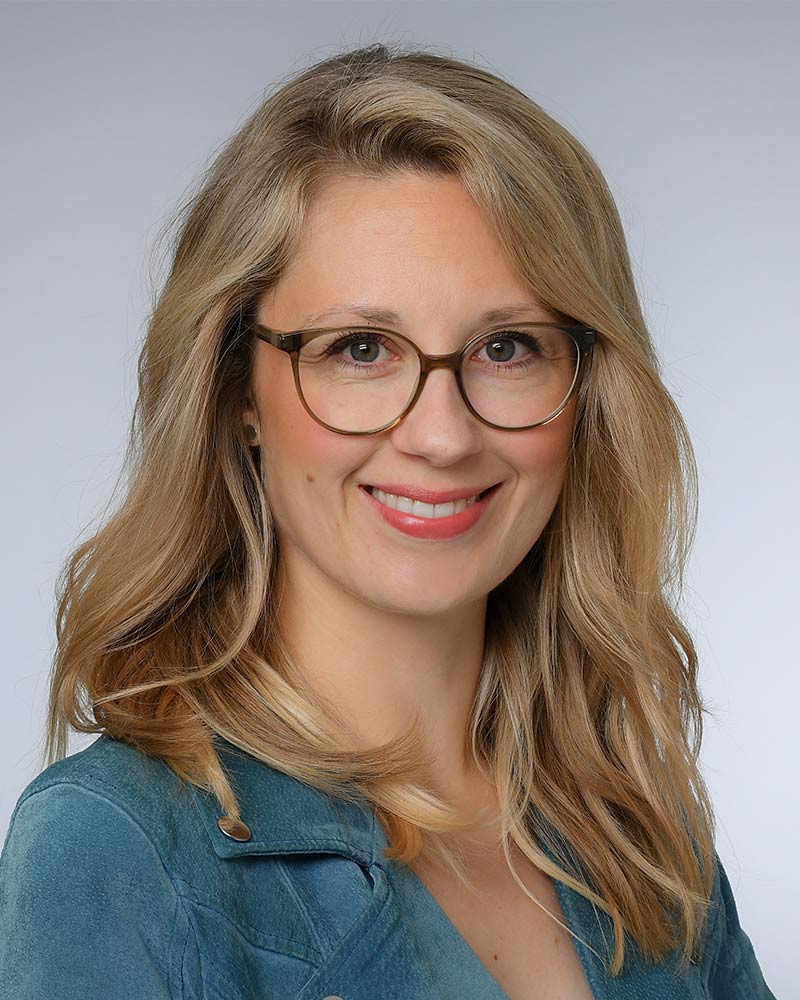
Dr. Thies, would you like to start by telling us something about your professional career? How did you come to specialize in speech motor disorders in Parkinson’s disease?
With pleasure! It all started with a degree in linguistics and educational science. At the time, I really didn’t think I would end up in neurological research. But one area of linguistics is phonetics – and that’s what really grabbed me. It deals with very specific, measurable characteristics of speech production, for example how the tongue and lips move when speaking, how speech sound is produced or how different sounds can be distinguished from one another. I found that simply fascinating.
The final spark came when I happened to hear a lecture by Prof. Dr. Doris Mücke and Prof. Dr. Michael T. Barbe. The two of them work on an interdisciplinary basis at the interface between phonetics and neurology. I immediately thought: that sounds exciting – I’ll write my Bachelor’s thesis on it! At the time, it was still on the subject of “essential tremor”. But from then on I was “hooked”, as they say. My Master’s thesis was then about Parkinson’s patients, as was my doctoral thesis – and a few years later I’m still here.
What fascinated you so much about working with people with Parkinson’s that you stayed with it?
It’s the mixture. On the one hand, I have the part at my desk, working on data and analyses. But I also have direct contact with patients, see their reality, understand what’s on their minds – and learn how important speaking up is for their participation in life. It’s not just “just research”, it’s about making a real difference. And that’s what makes my work so meaningful.
What do you see as the biggest challenges in your research?
One thing is clear: speech is often underestimated in medicine! Everyone knows that Parkinson’s will eventually lead to speech disorders, but little is done about it in practice. Speech therapy is rarely prescribed, there is a lack of specialized therapists, and even in research, speech problems have long been classified as a late symptom. However, we now know that changes in speech often occur very early on – sometimes even before other symptoms are noticed.
What’s more, those affected often don’t notice their changes in speech themselves. This is due to an impaired feedback system: if they speak more quietly, it seems completely normal to them – and if they then try to speak louder, they immediately perceive this as “shouting”. This discrepancy between their own perception and that of others makes many things more complicated.
You received the Parkinson’s Foundation Innovation Award for your project. What exactly is the study about?
We want to find out whether changes in speech can be used as so-called speech motor biomarkers – in other words, as measurable indicators that point to the disease long before other symptoms appear. To do this, we are analyzing acoustic speech signals from people at different stages of Parkinson’s disease, but also from people with REM sleep behavior disorder. This group is particularly exciting because many of them will develop Parkinson’s or a related disease in the coming years.
We are specifically looking at subsystems of speech – such as breathing, articulation and phonation – and using AI to investigate whether and when changes occur. The hope is that we will be able to say at some point: From this point onwards, there is clear evidence of a speech problem related to Parkinson’s. And then we could intervene therapeutically at a very early stage – perhaps even before major limitations develop.
What speech motor deficits typically occur with Parkinson’s and how do they affect daily life?
Probably the best-known symptom is a very quiet voice, often combined with unclear articulation and an altered voice quality that sometimes sounds hoarse or breathy. What many people don’t know: Prosody also changes – in other words, the ability to emphasize what is being said with volume and pitch. Many patients then speak more monotonously, almost robotically, which means that they are often misunderstood – both in terms of content and emotionally.
This can be extremely stressful. Some withdraw from conversations because they have the feeling that they are not being heard or understood anyway. There are even reports that those affected are perceived as “emotionless” simply because their voice no longer conveys any emotion. After all, communication is a basic need – and if it is restricted, this not only affects social interaction, but also very practical things in everyday life.
Why is it so important to recognize speech changes early?
Because we know that speech therapy can no longer improve speech functions later on, but can only maintain them. Once a certain level of function has been reached, it can no longer be recovered. This is why it is so important to intervene early – in other words, at the very moment when the first changes become apparent, even if they are not yet perceived as problematic.
The trick is to reach those affected in good time and convey the importance of these early changes to them – even if they do not yet feel any limitations themselves. This is a challenge in terms of communication, but it is worth it.
Could your research findings change clinical practice in the future?
That is the goal, yes. We hope that our findings can be integrated into digital tools – for example, as simple screening apps or software that supports doctors in everyday clinical practice. A typical idea would be a tool into which patients speak briefly, whereupon an algorithm provides feedback: Speech disorder yes/no, and if yes – how severe?
Something like this could help to prescribe therapies earlier or to monitor the course of the disease more closely. This is also an exciting approach for personalized medicine. We are now working on this issue in parallel in the research project “Digital biomarkers for speech changes in Parkinson’s disease“, which started in Cologne at the beginning of 2025.
How do the patients themselves experience these changes? What feedback do you receive?
When the therapy takes effect – for example after deep brain stimulation (DBS) – we often hear that speaking is no longer so strenuous, that patients no longer have to constantly repeat themselves and that they are more actively involved in conversations again. This is very positive feedback that shows us how important speaking is for quality of life.
On the other hand, it is of course frustrating when everything gets better – except the speech. We then try to change the DBS settings, for example, to achieve better results. It’s a constant balancing act – but if we find a solution together with the patient, it’s worth it.
You also work with artificial intelligence. What role does it play in your research?
A big one! We have a collaboration with a start-up that specializes in AI-based, speech-based biomarkers. We want to try to automatically analyze large amounts of data in order to recognize patterns that are not audible to the human ear. It is important to me that the AI should not simply make decisions “blindly”, but that we work closely with phonetic and neurological experts to interpret the results in a meaningful way. The progression of Parkinson’s is so individual – it requires differentiated, intelligent models that don’t just think in black and white.
I am convinced that AI will be an important part of diagnostics and therapy support in five to ten years’ time – not as a replacement, but as a helpful tool.
What advice would you give to Parkinson’s patients who want to maintain their ability to speak?
Speak out loud! It sounds banal, but speaking out loud activates the respiratory muscles, improves articulation and acts like a full-body workout for speaking. Just five to ten minutes a day can make a big difference.
If you like, you can use a smartphone and a decibel app to check whether you are reaching 70 or 80 decibels, for example – this is often necessary to be understood well in everyday life. Holding a long vowel (“Aaaaaa…”) at as constant a volume as possible is also a good exercise. And if you enjoy it, find a choir and sing along! This is social training, breathing training and communication support all in one. There are even special Parkinson’s choirs – this is not only therapeutically useful, but also simply fun.
What role do relatives play in the treatment of speech disorders?
A very big one. Patients often have to be triggered from the outside to make them realize that their voice is too quiet. A simple “Can you please speak a little louder?” can help. Feedback with technical aids such as decibel meters can also change perception.
I always say that patients can speak up – they just have to want to. It is often the case that they speak much louder in hospital than at home. Then the relative says: “But he doesn’t usually talk like that!” And that’s usually true. So it’s about establishing a new normal – for your own perception and for those around you.
How important is cooperation with other departments in your work?
Extremely important! Parkinson’s affects so many levels – motor, cognitive, linguistic – you can’t cover everything on your own. We work closely with neurologists, speech therapists, computer scientists and other specialists to really get a comprehensive picture. Interdisciplinary networks like the one in Osnabrück are a great example. There, neurologists, therapists and others regularly come together to discuss cases. I found that incredibly inspiring – it’s cooperation in action for the benefit of patients. In Cologne, we are currently trying to set up something similar with a speech therapy focus.
What motivates you personally in your work – and what are you particularly proud of?
What fulfills me is the combination of research and real impact. I don’t just sit in a quiet room, I see that my work can help people – and that motivates me immensely. I am actually particularly proud of the Parkinson’s Foundation Innovation Award. It was a sign for me: The topic of speech is taken seriously – even in neurological research. And the fact that I, as a non-medical professional, was able to acquire funding in this context was a real highlight for me.
Was there a moment with a patient that you particularly remember?
Yes, right at the beginning of my research I had a patient who suddenly developed very strong dyskinesia during an admission – in other words, uncontrolled movements. She then simply lay down on the floor and said quite relaxed: “I do that at home too.” For me as a young researcher, that was a shock at first – but she was totally relaxed. That taught me a lot about dealing with the disease: how individual it is and how much composure some people have.
And finally: How do you see the future of Parkinson’s research in relation to speech and communication?
I believe that speech and language are becoming an increasingly important window into the disease process – both for diagnostics and therapy. Speech systems are fine and sensitive, and therefore very well suited to detecting the smallest changes at an early stage. And if we manage to develop robust, speech motor biomarkers that can be recognized automatically, then we will have an incredibly powerful tool in our hands.
Thank you very much for the interview and good luck with your research.