Networks create connections – and improve care
Interview with Carina Lummer about innovative care approaches for Parkinson’s disease
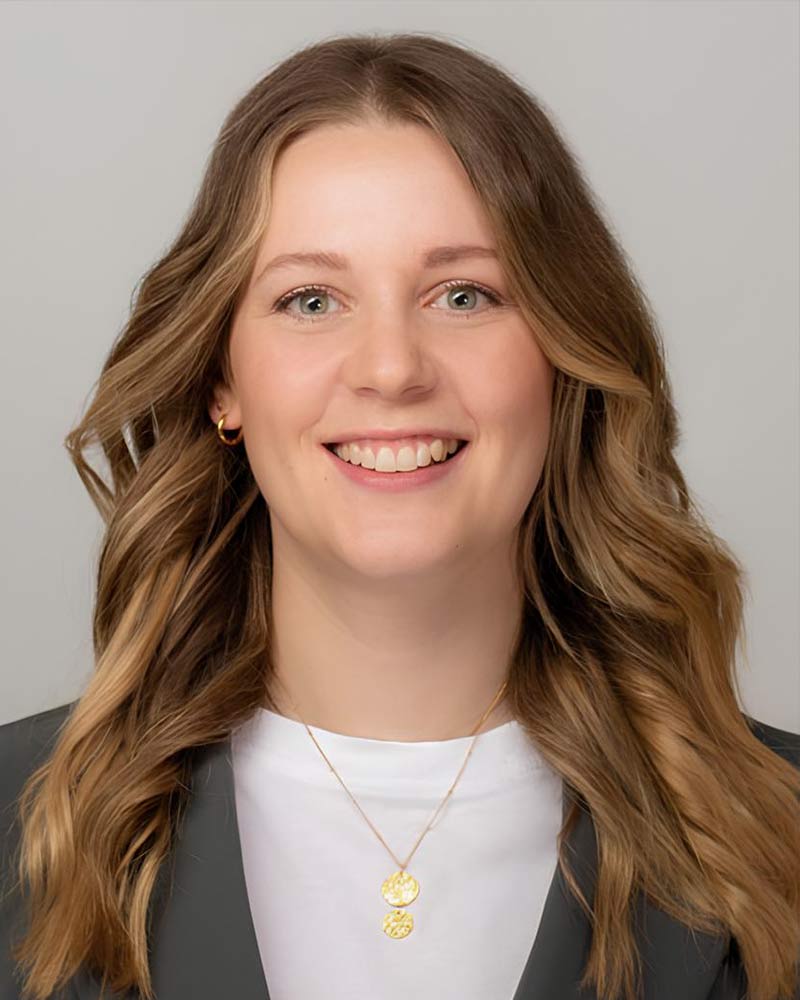
Ms. Lummer, you have a background in health economics. What made you choose this field and how did you come into contact with the topic of Parkinson’s?
My path began with a bachelor’s degree in business administration, but even then I realized that the traditional business environment didn’t suit me. I then took a closer look at the topic of healthcare, including an internship in a hospital, which showed me how exciting it is to develop care concepts. During my Master’s degree in Bayreuth, I specialized in health economics. I first came into contact with the topic of Parkinson’s and networks during an internship. This work never let go of me, and so I later pursued network work scientifically. Today I work at Optimedis, where we work together to improve regional care structures. I was particularly fascinated by how much potential there is in the design of non-medical care structures – in other words, in concepts that focus on people but go beyond the traditional medical approach.
You are Managing Director of Parkinson Netzwerk Deutschland e.V., which was founded in 2023. Have you been involved from the start?
Yes, I am a founding member together with Prof. Dr. Tobias Warnecke and Prof. Dr. Carsten Eggers. The association’s work originated from a working group on the topic of networks. Originally, this was very medical in nature, but over time more perspectives were added, including from management and research. Together with other committed individuals, we developed the statutes and founded the association in March 2023. The aim was to give the many regional networks a coordinating, supportive body that is also able to raise funds. Especially at the beginning, it took a lot of initiative: we wrote the articles of association in our free time in the evenings and then asked someone with a legal background to proofread them. Today, this has developed into a professional structure that has a nationwide reach.
What are the goals of Parkinson Netzwerk Deutschland e.V.?
We want to improve care for people with Parkinson’s by networking all those involved. Care in Germany varies greatly from region to region. In some areas, such as Saxony, there is a considerable shortage of specialists, while in other federal states, care is significantly better. Local networks can respond to these specific needs. The association supports these regional structures, offers guidelines, quality criteria and an audit procedure to ensure the quality of care. It is also important to define what constitutes a real network: it is not enough for two neurologists to exchange information. Interdisciplinary cooperation between all those involved, including nursing staff, therapists, social workers and patient representatives, is crucial.
How is such a Parkinson’s network structured and what exactly happens there?
The networks organize regular meetings, usually on a quarterly basis, at which all care stakeholders in a region come together. The elements of education, communication and coordination are important here. For example, there is professional input, but also space for exchange. If a therapist can speak directly to a neurologist because they are both in the same network, this improves care immensely. Some networks have now also employed coordinators who organize events and actively promote exchange. At one of these meetings, for example, an innovative format was introduced: Case conferences with “personas” – fictitious but realistic patient examples that take into account not only medical, but also social and emotional aspects. This opens up new perspectives, for example: What role does nutrition play? What psychological needs exist?
Are patients also part of these networks?
Yes, absolutely. Patient representatives are an important component and it is also a quality criterion that their perspective is included. Our aim is for care to become “fluid” for patients. They should not have to fight their way through the system, but ideally not even notice that they are part of a network – and instead simply receive good care. The involvement of those affected is important to us, even if we consciously ensure that they are not overwhelmed. Care must be designed in such a way that it relieves patients and does not place additional demands on them. They must, of course, be informed and involved at the relevant points – but not be held responsible for every coordination or structural issue.
How can you become part of a Parkinson’s network?
Providers can register with regional networks and take part in meetings. Later, they often conclude a cooperation agreement that regulates the collaboration. This is not legally binding, but is an expression of a shared commitment to care. It is important to get involved, for example by attending meetings or educational events. We don’t expect everyone to take on the same role, but we do expect everyone to play an active part. It’s about a culture of togetherness.
How can those affected find out whether their treating doctors and therapists are part of a network?
We are currently working with the Hilde Ulrichs Foundation on an online tool called Parkinson’s Pilot. In future, it should be possible to research regional care providers and see who is part of a network. This will enable patients to actively choose network care.
What specific role do these networks play in the provision of care?
A very central one. They are like a seal of quality for coordinated, interdisciplinary care. The networks work with tools such as quickcards. These are a type of referral with specific therapy recommendations that enable a dialog between neurologists and therapists. In addition, there are more and more network managers who provide organizational support and systematically promote exchange.
Where do you currently see the greatest challenges in the care of Parkinson’s patients?
Firstly, in terms of diagnosis: the symptoms are often unspecific, especially at the beginning. Many sufferers only receive a confirmed diagnosis years later. Secondly, Parkinson’s is very individual, which makes standard care difficult. Added to this are psychological stress and care challenges, including for relatives. And what helps many patients is the exchange of ideas with each other, for example in self-help groups – but also humor, as we often hear.
Which innovative care models do you think are promising?
Regional care is the key. Supplemented by digital solutions, such as telemedicine or digital health applications (DiGAs), to bridge supply bottlenecks. Telemedicine is a great benefit for people in rural areas in particular. The idea is that GPs can consult with Parkinson’s specialists digitally when a diagnosis is pending or therapy adjustments are necessary. There are also already good apps for therapy services themselves, such as exercise therapy. However, a political framework is also needed to anchor these innovations in the long term.
What needs to change politically so that networks can exist in the long term?
There needs to be structural and financial recognition of regional networking. Services such as coordination or network management must be remunerated. We are holding talks with health insurance companies, working with care data and hope that this will lead to official remuneration models in the future. Political lobbying, such as congresses and discussions with decision-makers, are also part of this. We are also guided by models such as the shared savings principle.
Is there an experience that has particularly shown you how important networking is?
Communication often reveals that even small adjustments in everyday life can improve patient care.
Simple votes make a huge difference. They show that care should not only be thought of in medical terms, but also in social and organizational terms. It is often not a lack of specialist knowledge, but a lack of structure and communication.
Ms. Lummer, thank you very much for the interview and your great commitment!